 CAN DO PLUMBING
Our work · Central heating cleaning · Edinburgh
Home / Our Work / MagnaCleanse case study
Central Heating System MagnaCleanse in Edinburgh
Removing magnetic sludge and protecting a 13-radiator heating system. During a property renovation, an installation of three new designer radiators uncovered significantly discoloured central heating water. Here is how we investigated, cleaned and protected the existing heating system.
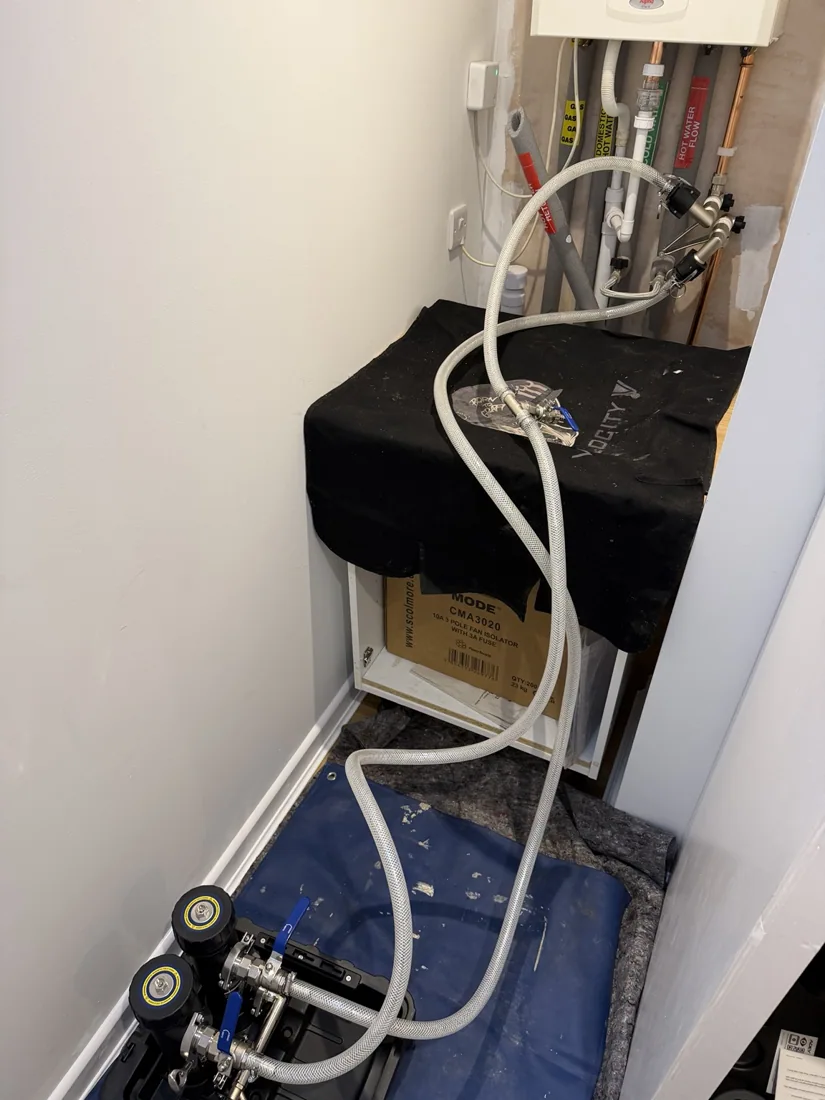
The project: three new designer radiators
Can Do Plumbing was carrying out plumbing and heating alterations during a home renovation, including fitting three new vertical designer column radiators. The existing central heating system served 13 radiators.
Routine checks after the installation revealed unusually dirty circulating water. We investigated further using ADEY ProCheck and visual water-quality samples. The initial discolouration raised concerns about corrosion products and other accumulated deposits within the existing system.
The problem: contaminated central heating water
We introduced ADEY MC3+ system cleaner and completed three initial cold-water flushes. Despite this work, samples remained brown and cloudy. Poor water quality can contribute to uneven heating, restricted circulation, component wear and reduced heat transfer. One new radiator initially heated poorly but improved after circulation adjustments; this alone did not establish sludge as the cause.
Rather than leave the wider heating system untreated, we explained the findings and showed the homeowner the water samples. With their approval, we arranged a full MagnaCleanse and a permanent ADEY MagnaClean Professional2 magnetic filter.
Protecting the property before work began
As with all our installation and maintenance projects, work surfaces and flooring were protected. Specialist equipment was positioned on coverings to help minimise disruption inside the home.
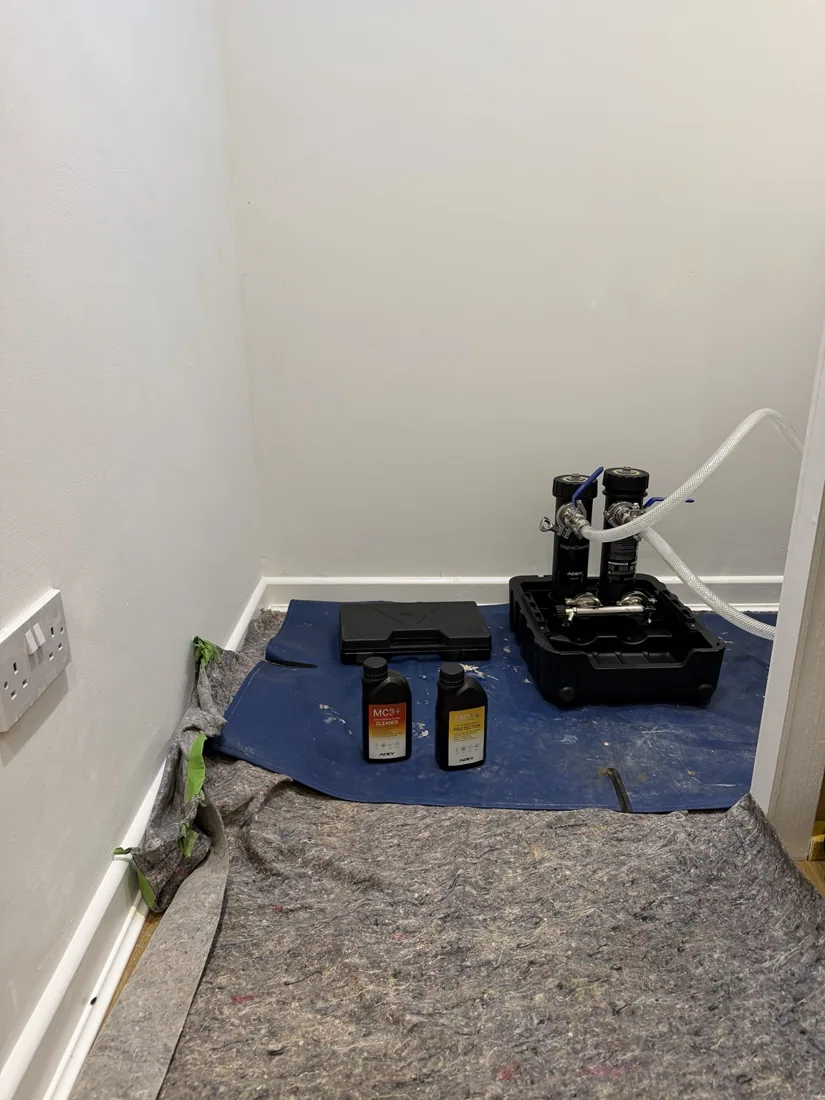
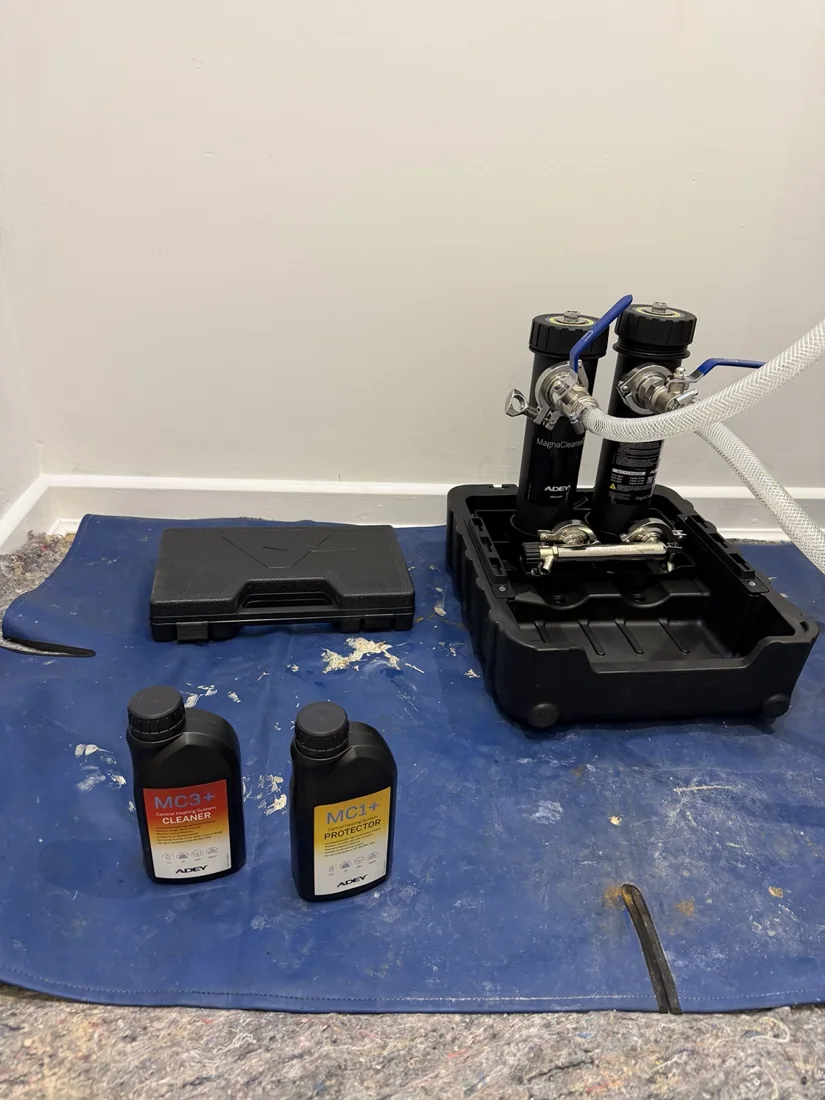
Our solution: a comprehensive ADEY MagnaCleanse
Stage 1 — Whole-system cleaning
MC3+ cleaner was left in the system over several days, within the manufacturer's permitted treatment period. On the return visit, we fitted the permanent filter connections below the boiler, connected the MagnaCleanse and circulated the heated system for approximately one hour with all 13 radiators open.
Stage 2 — Radiator-by-radiator treatment
We then directed circulation through each radiator in turn. Most received around 15 minutes of targeted cleaning, with shorter periods for some smaller radiators. We checked the condition of the circulating water and repeatedly inspected and cleaned the magnetic collection rods. The water visible inside the hoses became progressively lighter.
Stage 3 — Capturing magnetic debris
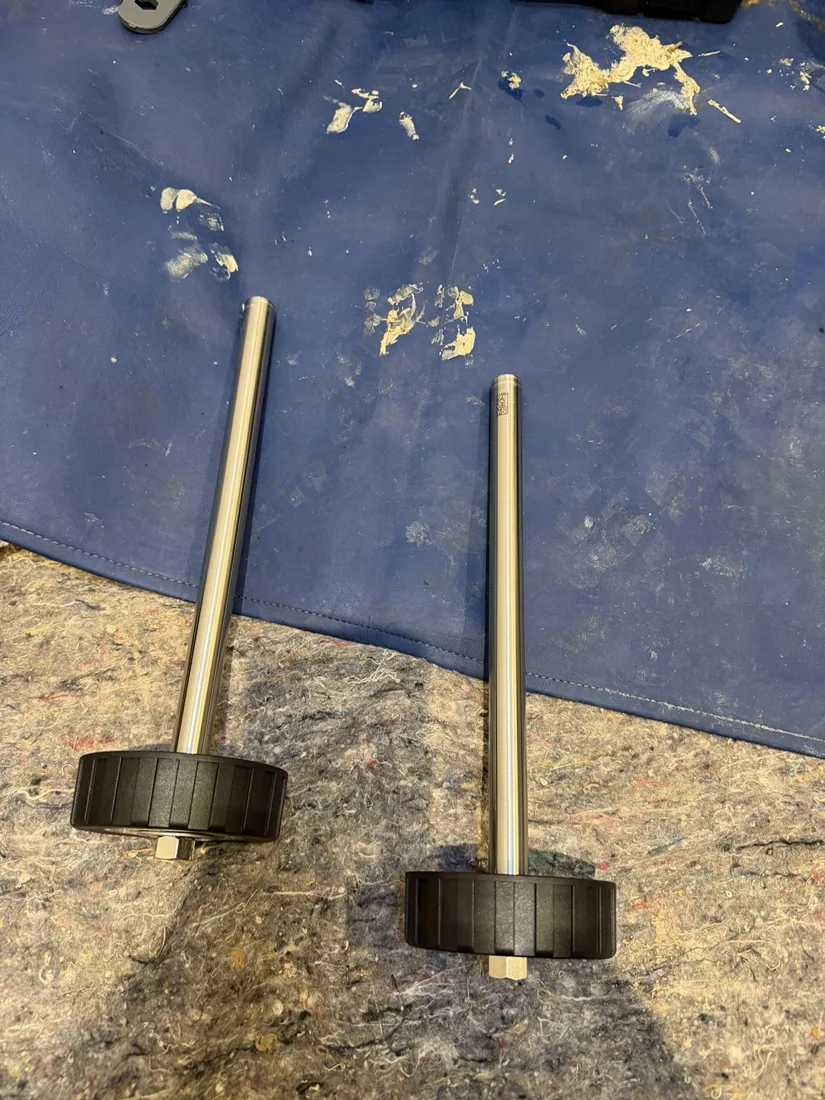
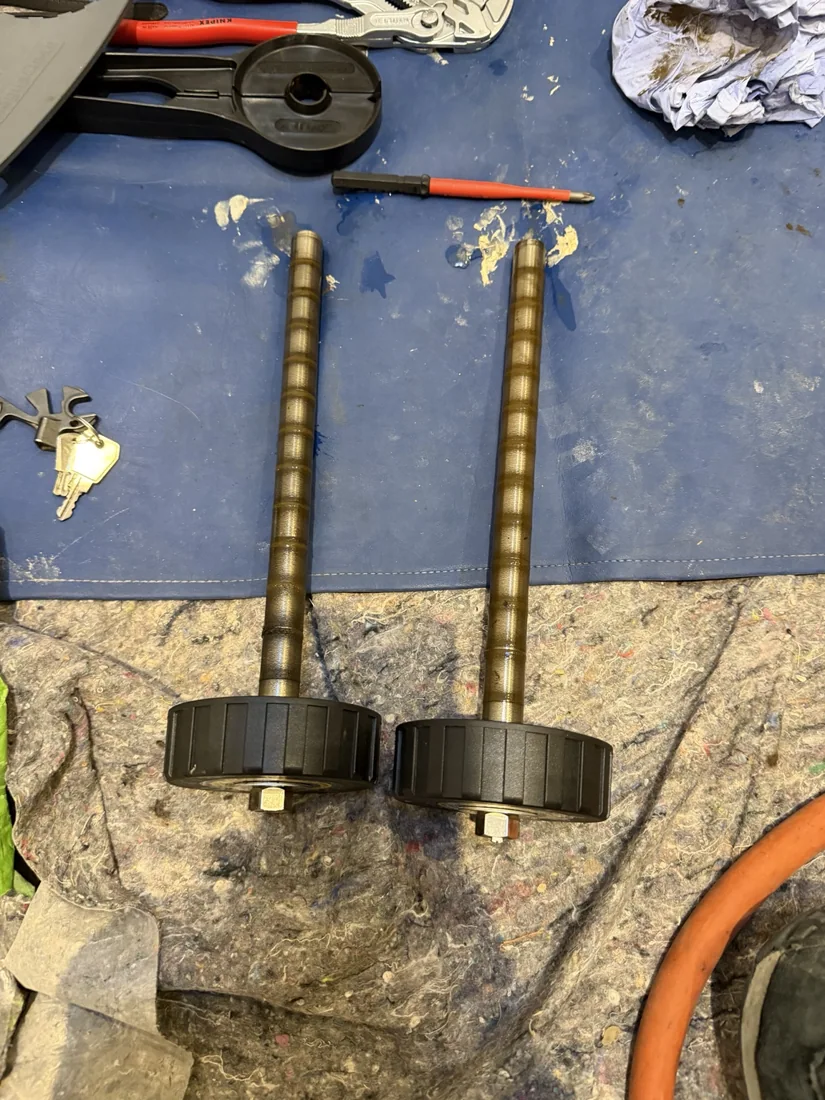
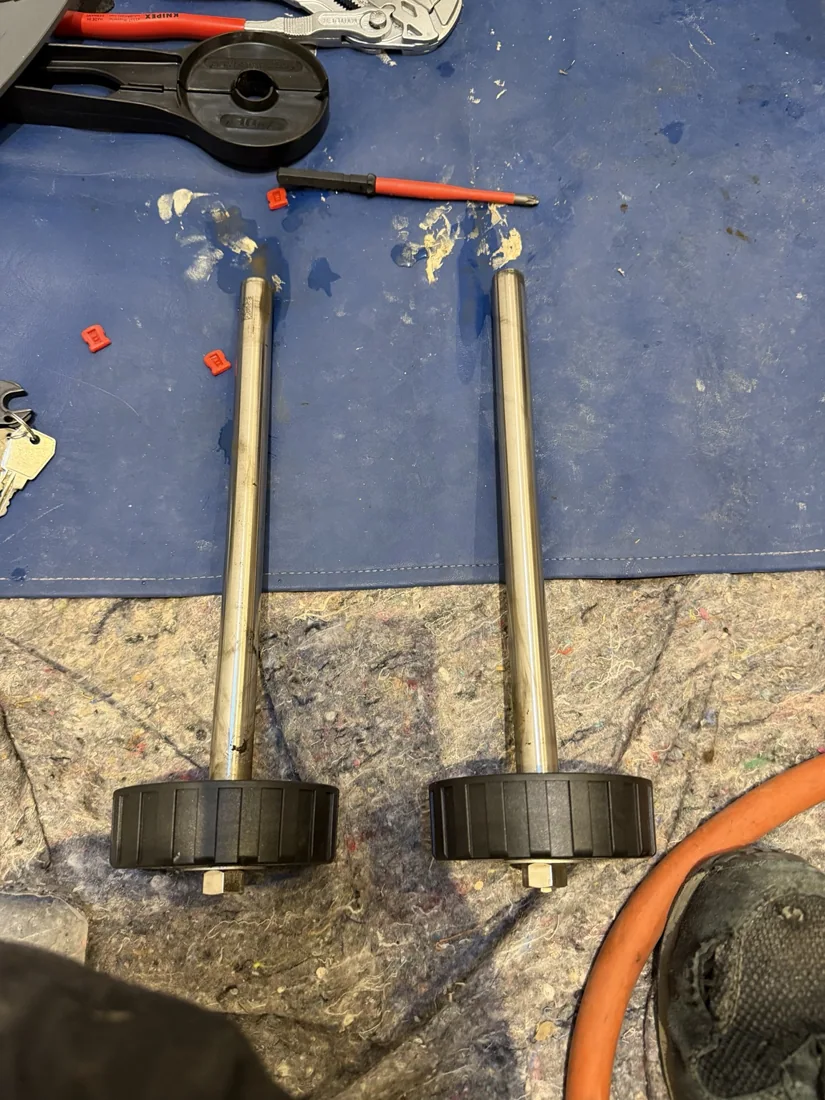
The two magnetic collection canisters captured dark deposits as water passed through them. After individually cleaning all 13 radiators, we performed a final whole-system circulation and inspected and cleaned the rods again. These deposits confirmed magnetic material was circulating in the system; magnetic collection alone does not remove every type of contaminant.
What the magnets collected
Our inspection photographs document the magnetic corrosion deposits removed during circulation and the collection rods after cleaning.
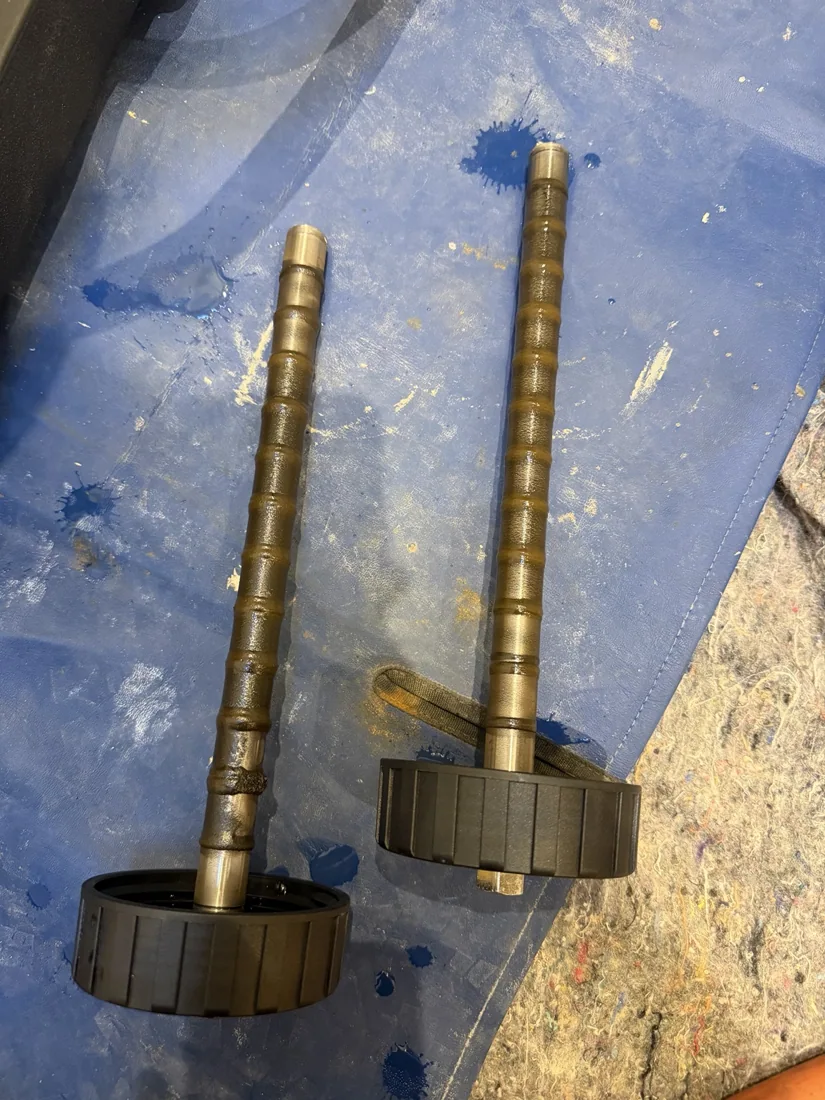
Stage 4 — Final cold flushing and water-quality checks
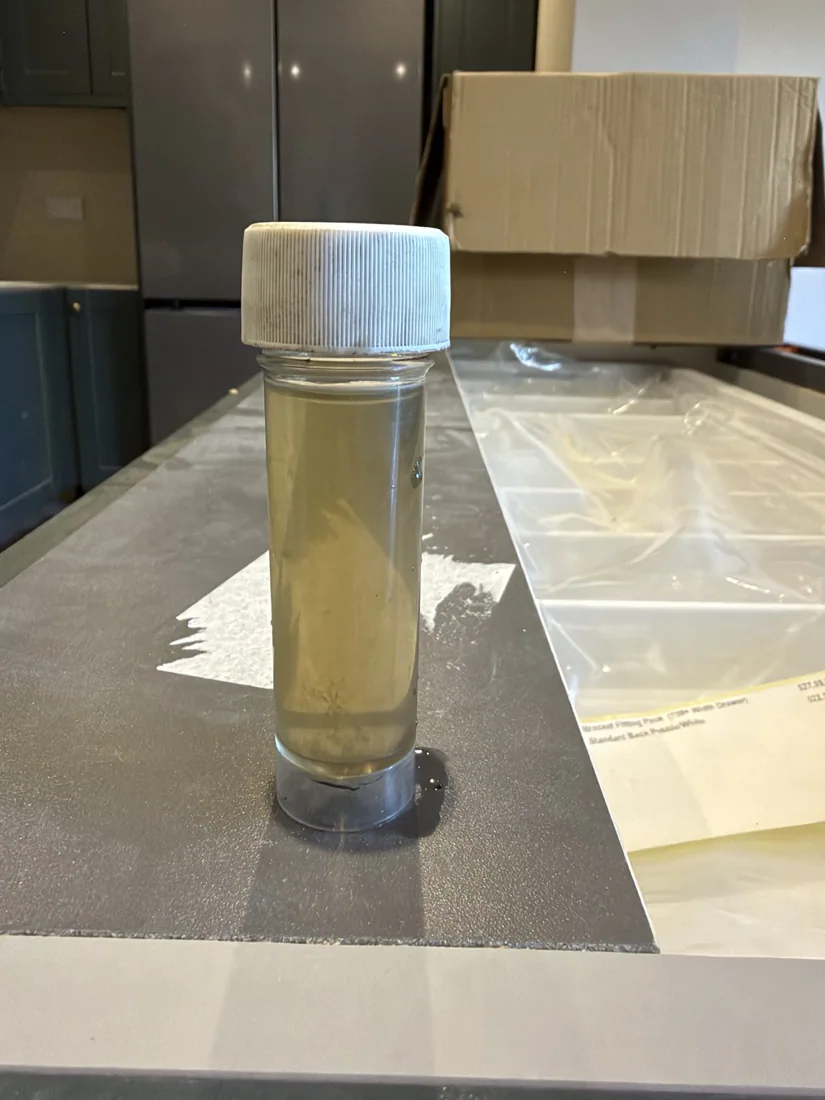
After completing heated cleaning, we drained and flushed the system with fresh water to help remove loosened contamination and residual cleaner. The final sample was markedly clearer than the original dark-brown water. We also used a separate magnet to spot-check the discharge; no visible magnetic material collected on that final check.
This is encouraging visual evidence of improvement, not a laboratory measurement or a guarantee that every trace of contamination was removed.
Long-term protection and commissioning
Following the flush, we completed ADEY MC1+ corrosion inhibitor dosing and inhibitor verification, together with radiator balancing and heating-system commissioning.
The permanent ADEY MagnaClean Professional2 magnetic filter was installed to capture magnetic particles during normal system operation. The filter and properly maintained inhibitor concentration serve different, complementary purposes: filtration removes circulating magnetic debris, while corrosion inhibitor is designed to limit further corrosion and scale formation. The filter should be inspected and cleaned as part of ongoing maintenance.
The results
| Assessment | Before cleaning | After MagnaCleanse |
|---|---|---|
| Water appearance | Dark brown and cloudy | Pale and substantially clearer |
| Magnetic contamination | Suspected from system condition | Magnetic debris visibly collected on rods |
| Cleaning | MC3+ treatment and three initial cold flushes | Heated whole-system circulation, individual radiator cleaning and final flushing |
| Final magnetic spot-check | Not recorded | No visible particles collected on the separate test magnet |
| Long-term measures | No existing magnetic filter reported | Permanent filter installed; MC1+ dosed and verified |
| System handover | Further cleaning recommended | Radiator balancing and commissioning completed |
Why professional central heating cleaning matters
Corrosion products and deposits can accumulate in heating systems without obvious external signs. A professional assessment, appropriate cleaning, magnetic filtration and correctly maintained inhibitor can support circulation and help reduce avoidable problems. No treatment guarantees a breakdown-free system, but preventative work can help protect components and support long-term reliability.
This project shows our approach: looking beyond the immediate radiator installation, documenting evidence, explaining the options and obtaining approval before additional chargeable work.
Need central heating cleaning in Edinburgh?
Can Do Plumbing provides heating water-quality assessments, system cleaning, radiator installation and boiler maintenance across Edinburgh and surrounding areas.
Good Work Done Right.
Explore central heating cleaning →
Call 07549 109222 or email candoplumbing.edinburgh@gmail.com.